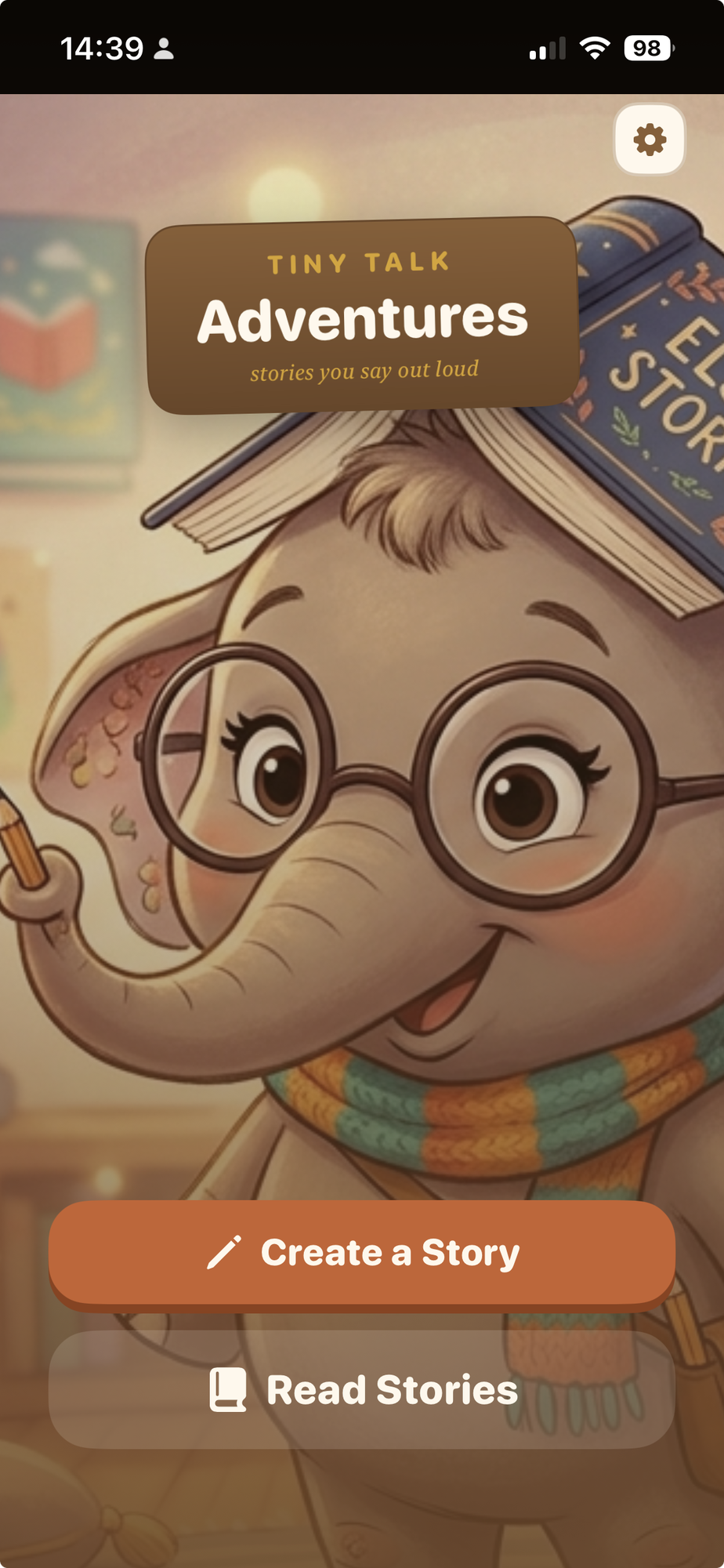
Private, voice-first story-making for kids
Tiny Talk Adventures lets a child and Elsie the elephant make up a story together out loud, then turns the conversation into an illustrated book. Speech recognition, the language model, the voice, and the artwork all run on one M1 MacBook Pro with 16 GB of RAM.
Young kids don't wait their turn
Young children think out loud and interrupt with a better idea halfway through. Most voice interfaces expect the opposite: wait for the tone, speak, wait again. With Tiny Talk the child can cut in any time, and Elsie stops and builds on what they said.
The child leads
Interruptions are welcomed, never corrected, and most replies end by asking the child what happens next.
Learning woven in
Real animal facts come from an animal-facts API instead of the model's memory, and the story world stays physically realistic.
Private at home
At home, a child's voice stays on the family's own phone and Mac. There are no accounts or analytics, and no third-party model calls.
From hello to a finished book
Children can talk, anytime
Elsie's always ready to listen, even when telling her part of the story. There are no buttons to learn: the child just speaks, and Elsie stops.
Facts inside the fiction
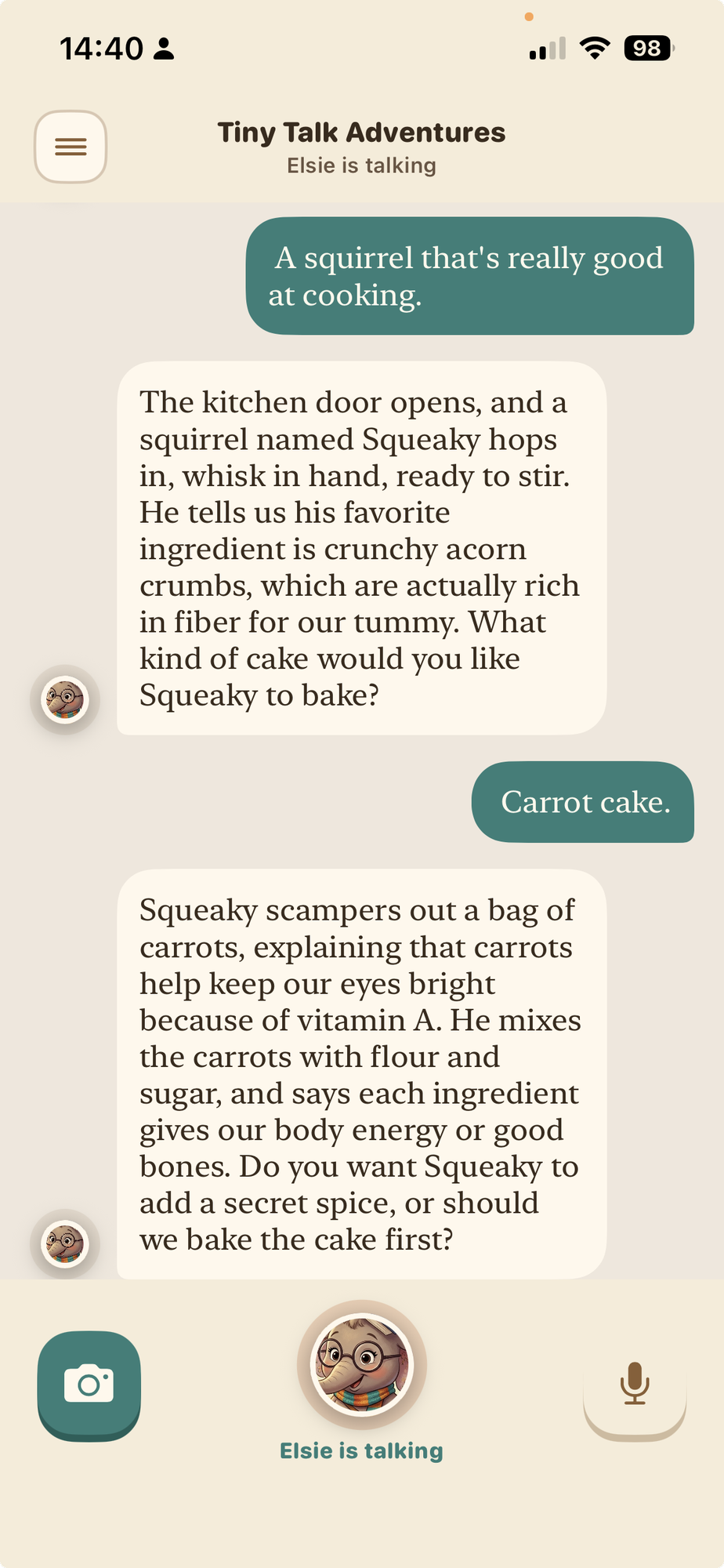
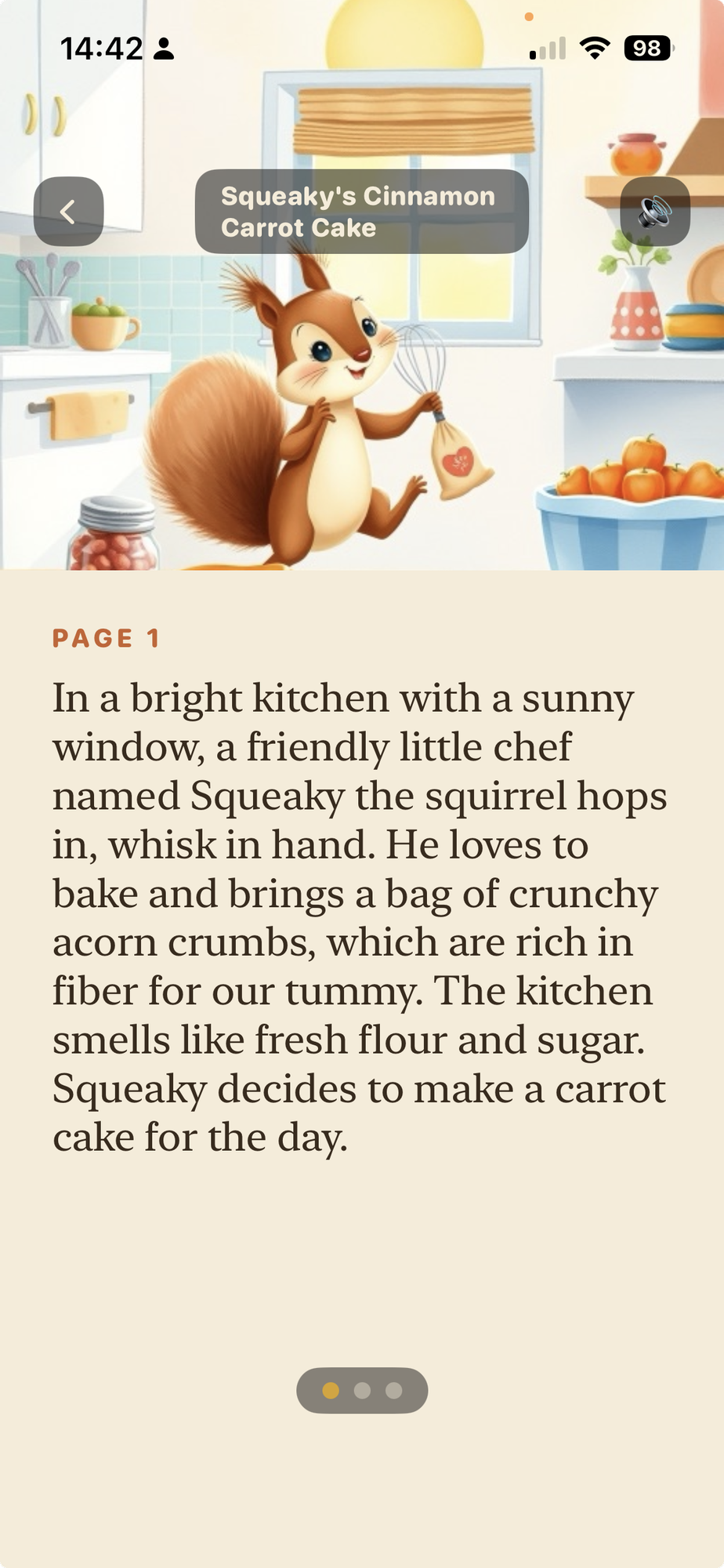
Squeaky's acorn crumbs are high in fibre, and his carrots carry vitamin A. The child learns through play.
The conversation becomes a book
Both voices are retold as picture-book pages, illustrated locally, with the same character on every page.
Every story gets a real ending
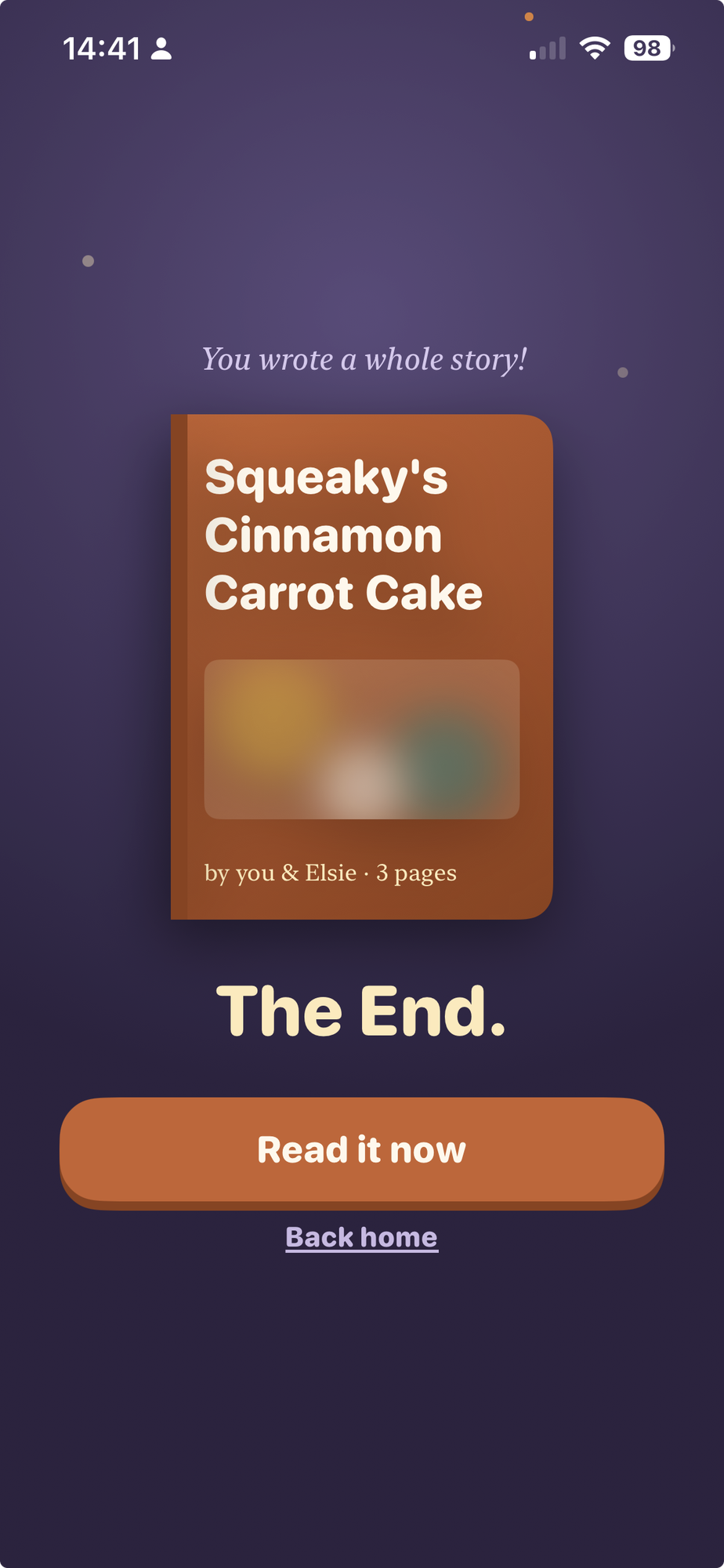
The story ends when the turn budget runs out, the child asks to stop, or Elsie wraps it up.
Things in the room can end up in the story
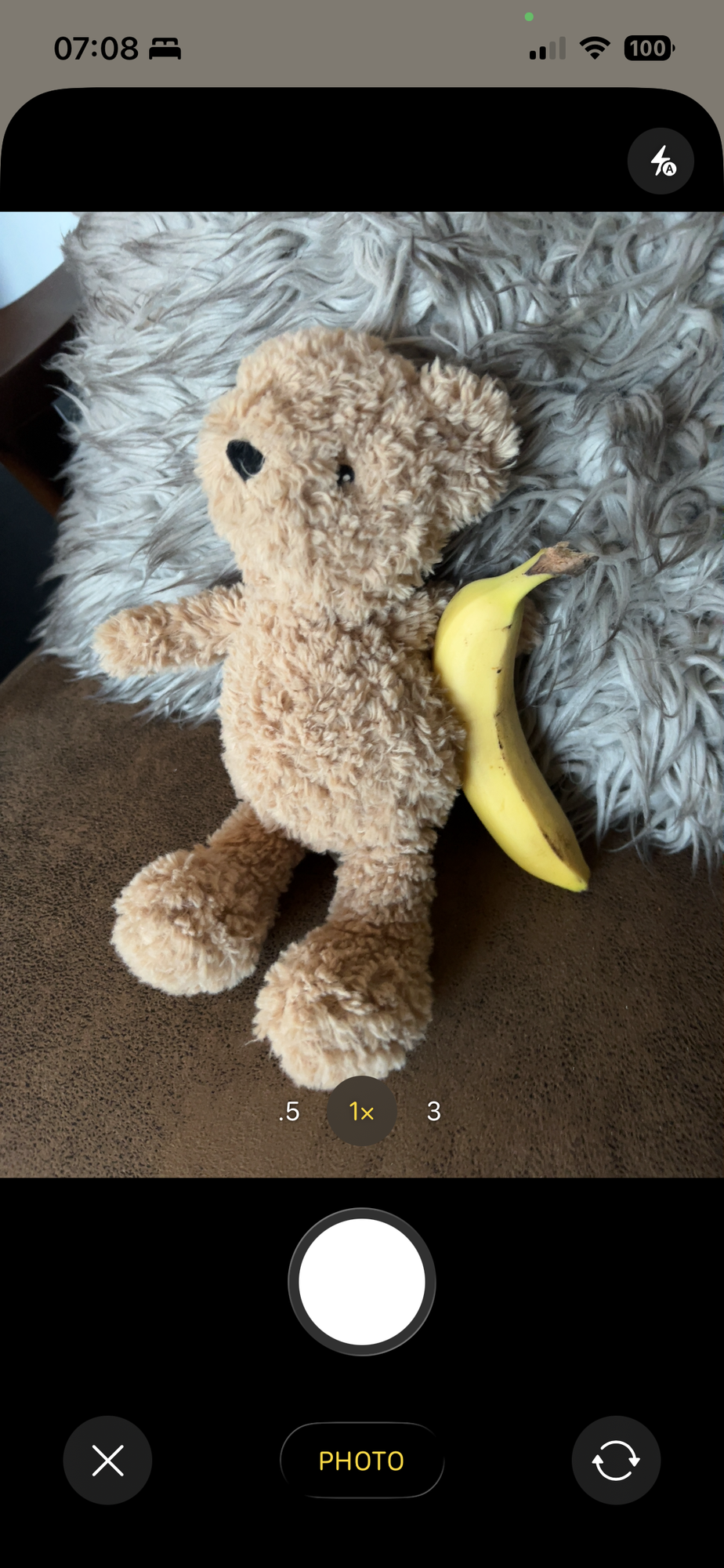
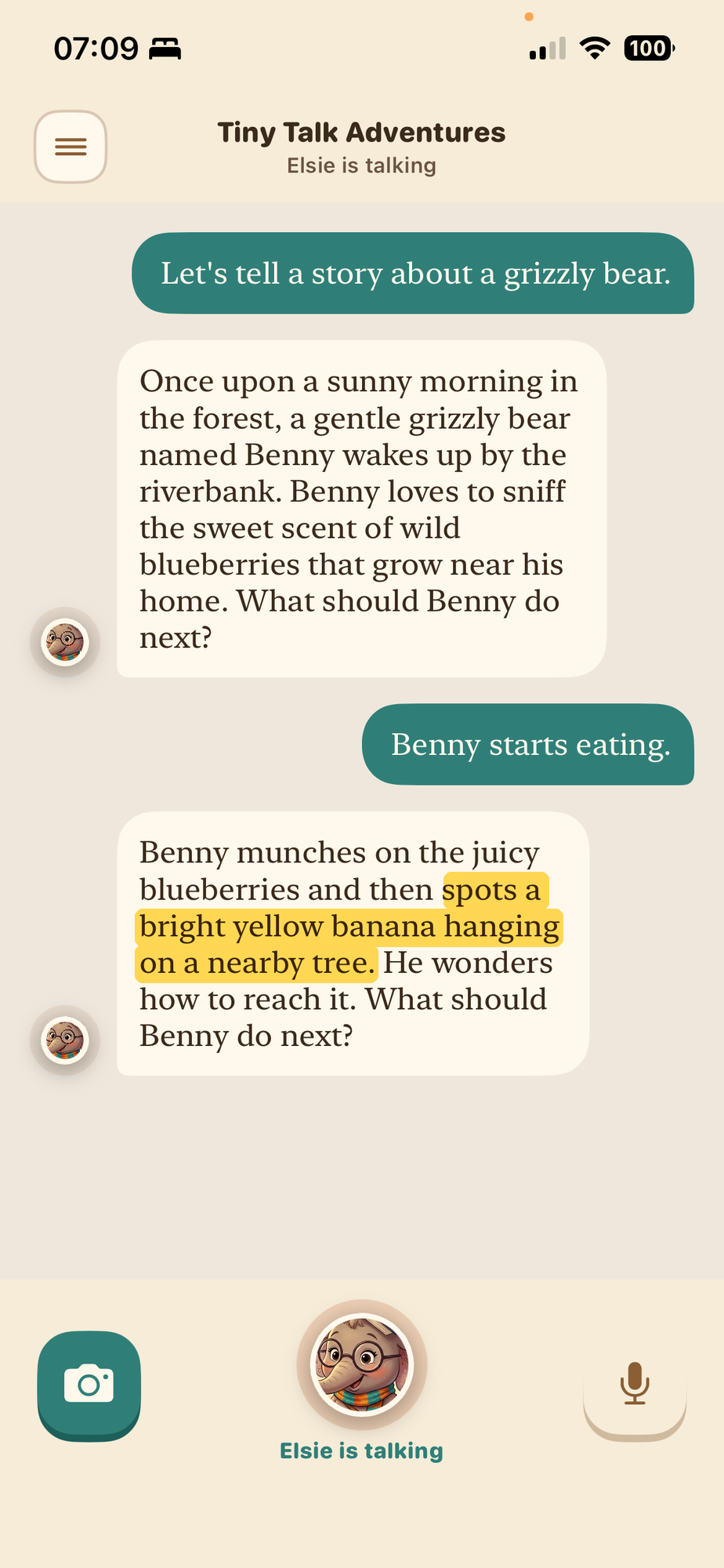
The child taps the camera and shows Elsie something, like this teddy bear holding a banana. An on-device classifier (FastViT-T8) names it, and Elsie works it into her next turn: Benny the grizzly, busy with blueberries, suddenly spots a bright yellow banana. The photo never leaves the phone; only the word "banana" does.
A simple interface hides real complexity
How the pieces connect (tap a box for details)
Solid lines run at home, on hardware the family owns. Dashed boxes are the away-from-home demo mode only.
Why:
Five goals, and what we learned from each
Real facts, real world
Animal facts come from an external API, not model memory. The story world stays physically real.
What we learned: A model will state a fact it never fetched. The book's closing fact is now written by deterministic server code, after the model was caught inventing one.
Stories that actually end
Five narrative stages over a turn budget, each adding its own guidance.
What we learned: Shorter stories with a real ending worked better than long ones. Testing cut the default from 12 turns to 7.
Everything on one Mac
Small, capable models, measured on this Mac: an 82M-parameter voice, a 1B transcriber, a 9B storyteller. Where a plain rule works (story staging, the safety check), no model runs at all.
What we learned: Models that each fit can still crowd each other out. Kept loaded side by side, the speech, voice and image models held 12 GB of a 16 GB Mac (not counting the storyteller), and every turn slowed as the machine swapped.
Local by default
At home, a child's voice reaches only their phone and the family Mac. No accounts or analytics.
What we learned: Cloud use exists only in the away-from-home mode, and the switch says so in plain words for grown-ups.
Assume defaults aren't safe
Every place that generates text for the child has its own safeguards and retry logic.
What we learned: Every new way of generating text needs its own safeguards. A review found the storybook-rewrite feature initially didn't have any.
A few implementation details
Rewrites and live turns can't overlap
The storybook rewrite and a live turn share one local LLM. A REWRITING state blocks overlap on every path into a new story, including the child simply talking again.
One LLM call per turn
Story stage, animal fact and camera object all arrive as guidance in the same LLM call, so adding one didn't add another model call.
A turn id on every frame
Transcription can take seconds, so a reply may arrive after the child has moved on. Tagging each frame with its turn lets the phone drop stale replies. Before this, replies landing on the wrong turn happened on real hardware.
A story outlives its connection
Backgrounding the app on iOS drops the connection, so the session outlives the socket. A disconnect doesn't cancel the turn; its output is buffered and replayed on reconnect.
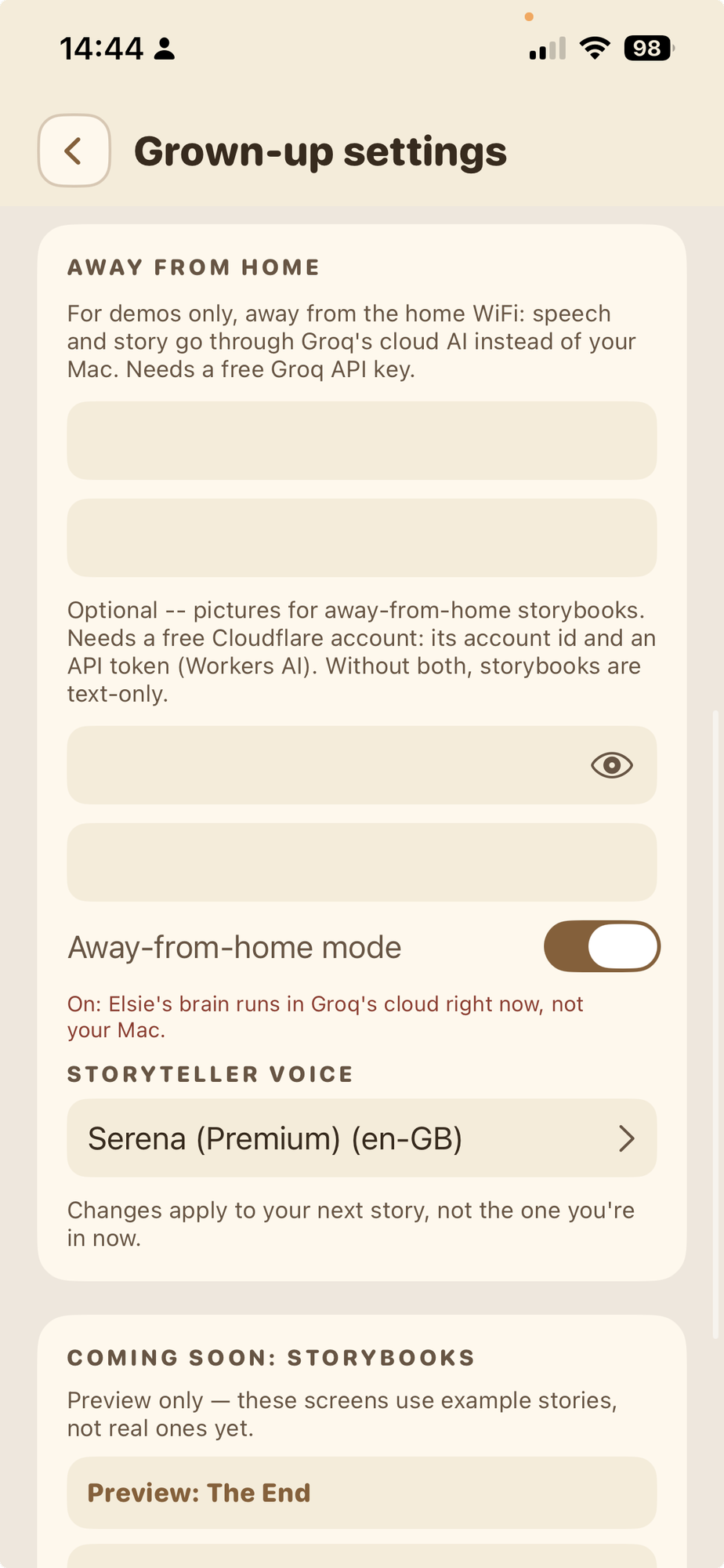
Grown-ups can see where the data goes
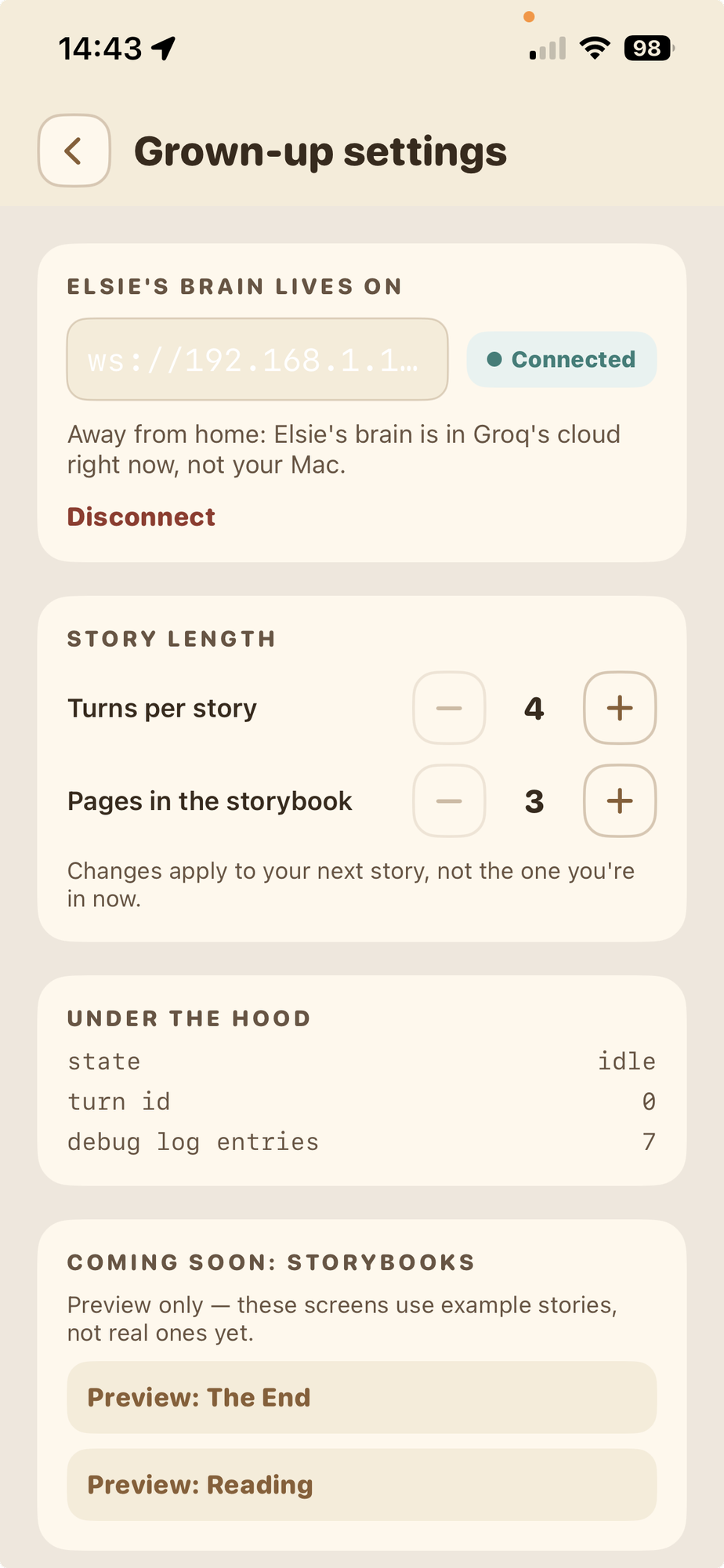
One settings screen shows where Elsie's brain is running, whether it's connected, and how long stories last. Turning on away-from-home mode shows a clear warning that the conversation now goes to a cloud service.